 Tianli
Tianli
Tianli
Explore our top-tier curated export portfolio, leveraging China's optimized green energy manufacturing supply chain for global distributors.







In the era of automated geospatial data acquisition and smart infrastructure development, high-precision industrial mapping drones have transcended simple aerial photography. Today, global enterprises are heavily investing in robust mapping solutions that integrate high-resolution photogrammetry, Light Detection and Ranging (LiDAR) hardware, and Real-Time Kinematic (RTK) technology. The growth of the low-altitude economy has generated a dual demand: on one hand, governments and infrastructure networks require precision drone mapping factories to supply reliable mapping platforms; on the other, they demand advanced Unmanned Aerial System (UAS) detection and countermeasure platforms to protect critical airspace.
As a leading supply chain powerhouse, Tianli International Trade Group stands at the convergence of these tech sectors. By facilitating parallel auto exports (including premium EV models like the BYD Han, Aito M9, and Nio ET5) alongside state-of-the-art UAS defense systems, Tianli provides complete industrial logistics and security solutions. In this whitepaper, we dissect the state of global drone mapping factories, analyze why China holds a definitive edge in manufacturing efficiency, explore localized applications, and detail procurement optimization for international buyers.
Tianli International Trade Group excels in managing cross-industry supply chains. Whether you are seeking direct supply from a leading drone mapping factory or importing zero-mileage new energy vehicles (NEVs), we ensure export compliance certified by the Ministry of Commerce of China, ensuring rapid turnaround, robust customs support, and end-to-end technical assistance.
The commercial drone market is shifting toward specialized drone mapping systems. Factories today do not merely manufacture flying frames; they integrate complex payloads including multispectral sensors, oblique cameras, and precise GNSS boards. Industries such as open-pit mining, forestry management, land surveying, and disaster response demand high-precision ortho-mosaics and 3D digital twins.
Currently, the global supply chain for drone mapping relies on components manufactured under strict tolerance levels. Factories are evaluated based on their ability to supply units that operate reliably in challenging environmental conditions, such as high-altitude winds and extreme temperatures. A modern factory must incorporate rigorous quality assurance checks, including electromagnetic compatibility testing, wind tunnel simulations, and automated sensor calibration.
However, the proliferation of civilian drones has introduced security risks to high-security zones like airports, power plants, and military bases. Consequently, the industry is witnessing a structural shift where factories manufacturing drone mapping platforms must align with low-altitude defense platforms to maintain secure and controlled environments.
China represents the epicenter of commercial drone manufacturing. The key advantage of a Chinese drone mapping factory is not just labor cost reduction, but rather the complete integration of the surrounding supply chain ecosystem. In regions like Shandong and Guangdong, factories are situated adjacent to sensor manufacturers, carbon fiber molders, battery chemistry facilities, and micro-electronics assembly lines.
This proximity enables rapid iterations. A design modification can be prototyped, manufactured, tested, and certified in a fraction of the time required elsewhere. Furthermore, factories benefit from a robust engineering talent pool specializing in aerodynamics, telemetry, and GNSS systems integration.
Tianli leverages this ecosystem to manage export operations, ensuring compliance with international regulations. Our experienced export team manages procurement, quality inspections, customs documentation, and logistics, offering international distributors a reliable entry point to secure Chinese drone technology, electric transport options, and low-altitude security platforms.
To demonstrate the practical value of these systems, we highlight several common application scenarios where drone mapping and low-altitude security work together:
Civil engineering and urban planning projects utilize RTK-enabled mapping drones to generate high-resolution 3D models. These digital models assist in route planning, site leveling, and structural monitoring. However, mapping critical infrastructure like high-speed rail networks requires drone security measures. Deploying integrated UAS countermeasures alongside mapping operations ensures that only authorized mapping drones operate in the designated airspace.
Multispectral mapping drones allow operators to assess crop health, manage irrigation, and detect pest outbreaks early. Using Normalized Difference Vegetation Index (NDVI) mapping, agricultural operators can optimize fertilizer application rates. Tianli’s electric tricycles and commercial transport options support these operations by facilitating utility logistics across rural agricultural sites.
Modern national security relies heavily on secure low-altitude operations. Border control agencies deploy mapping drones to document topographic changes and monitor remote regions. Concurrently, they establish fixed and mobile UAS detection and countermeasure platforms to neutralize unauthorized intrusions, protecting sovereign airspace.
Procurement managers sourcing from drone mapping factories should focus on the following key operational parameters:
By consolidating multi-brand EV procurement (including brands like BYD, Leapmotor, and Aito) and UAS detection hardware with a single provider, buyers benefit from reduced freight costs, consolidated customs clearances, and simplified technical communication.
The future of industrial drone mapping is shaped by three main technological shifts:
First, the transition from post-processed kinematics (PPK) to real-time, cloud-connected RTK networks. This shift allows mapping drones to receive centimeter-level positioning corrections directly via cellular networks, reducing reliance on local ground control points and accelerating processing times.
Second, the integration of artificial intelligence into post-processing software. Automated algorithms can now classify point clouds, extract building footprints, and generate digital elevation models with minimal human input, reducing processing backlogs.
Third, the development of integrated, multi-layered airspace management systems. As the density of commercial drones increases, systems that manage flight planning, real-time tracking, and automated UAS countermeasures will become standard for urban air mobility and security.
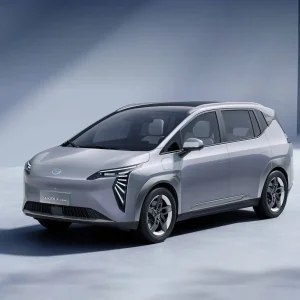
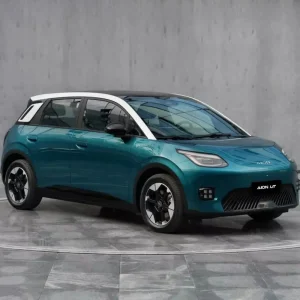
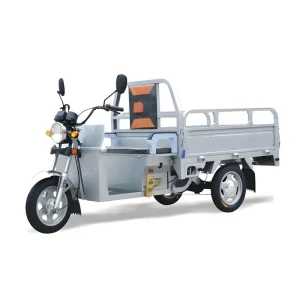
High-quality zero-mileage vehicles and industrial utility transportation options available for export.





For pricing queries, customized product specifications, or wholesale supply solutions, submit your request below. Our team will contact you within 24 hours.