 Tianli






1. The Evolving Horizon of Low-Altitude Airspace & UAV Tracking Systems
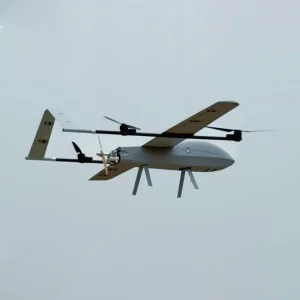
The exponential growth of civilian, commercial, and industrial Unmanned Aerial Systems (UAS) has revolutionized delivery networks, geological surveying, and agricultural monitoring. However, it has simultaneously introduced unprecedented security risks to critical infrastructure. As low-altitude economies develop, tracking and countering non-cooperative drones has transitioned from a specialized defense capability to a mainstream industrial safety requirement. Modern UAV tracking factories are now combining radio frequency (RF) analysis, radar detection, photoelectric tracking, and active mitigation to secure airspace bounds.
For global enterprise buyers, purchasing tracking components or complete end-to-end setups is no longer just about buying raw hardware. It requires an in-depth understanding of the electromagnetic compatibility of systems, processing lag, and sensor integration. Leading factories in this sector focus on multi-spectral detection arrays that can identify target signatures in high-noise urban environments and under harsh weather conditions.
2. Global Procurement Demands: What Strategic Buyers Look For
When sovereign agencies, multinational energy grids, and major airports evaluate global UAV tracking suppliers, their evaluation criteria go far beyond initial system prices. Long-term reliability, low false-alarm rates, and ease of deployment are the decisive parameters in complex requests for proposals (RFPs).
Sensor Fusion Integration
Combining passive RF sniffing with thermal imaging (FLIR) and micro-Doppler radar to guarantee detection under zero-visibility conditions.
Jamming & Neutralization
Dynamic, non-destructive neutralization protocols, including GNSS spoofing and directional frequency disruption to force safe landings.
Operational Compliance
Securing FCC, CE, and country-specific military-grade certifications to prevent unlawful interference with civil aviation and public telecom bands.
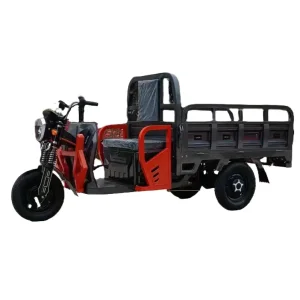
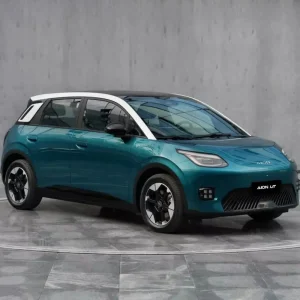
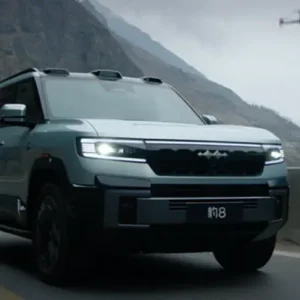
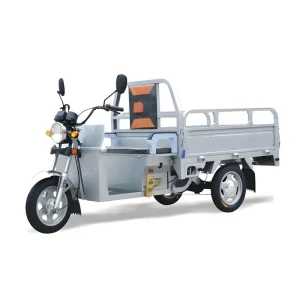
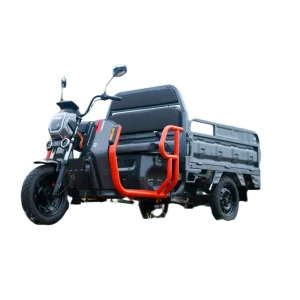
Furthermore, integration with land transit platforms is emerging as a critical trend. Enterprises increasingly require mobile UAV tracking stations integrated into multi-terrain support vehicles or electric utility fleets, allowing rapid relocation to secure changing event perimeters or border control lines.
3. China Industry 4.0: Supply Chain Resilience & Cost Optimization
China's manufacturing ecosystem is built on deep supply chain integration. In the context of drone defense systems and logistics, this manifests as direct proximity to primary raw material processing, sensor component manufacturing, and fast prototyping facilities.
Tianli International Trade Group leverages these industrial advantages by bridging the gap between specialized research and international logistics. Located in the heart of China’s high-tech manufacturing sector, our partners use automated assembly lines, surface mount technology (SMT) for RF circuit cards, and environmental chambers to test hardware from -40°C to +85°C.
- Consolidated Logistics: One-stop export licensing, hazardous materials handling for lithium battery storage, and complete customs clearance.
- Cost Optimization: A 30% reduction in production costs compared to Western factories, driven by local availability of components like FPGA processing chips and high-gain antennas.
- Guaranteed Capacity: The capability to scale production from small batches to large deployments, ensuring a stable monthly supply of specialized security equipment and transit support.
4. Global Application Scenarios: Tactical Implementation
How are organizations deploying UAV tracking and counter-UAS platforms in real-world scenarios? Applications differ significantly depending on the target infrastructure and local regulations:
A. Critical Commercial Sites & Airports
Airports deploy long-range passive RF sensors around their approach corridors. When a non-cooperative drone is detected, the system alerts air traffic controllers and uses long-range camera lenses to identify the drone's model and payload, minimizing operational disruptions.
B. Border Patrol & Mobile Security
Securing remote border sections requires mobile, high-durability equipment. Our partners integrate tracking platforms directly onto rugged utility vehicles and electric transport units. These mobile setups run off battery power banks, enabling continuous passive airspace monitoring while patrolling remote paths.
C. Industrial Energy Parks
Refineries and nuclear power stations use automated, continuous monitoring. The system links detection inputs to automated jammers, establishing a persistent dome of protection that blocks intrusion attempts without requiring constant manual operator supervision.
5. System Specifications & Price Benchmarks
Below is a breakdown of technical tiers and estimated price ranges for industrial and defense-grade UAV tracking installations. Actual costs depend heavily on radar range requirements, frequency bands, and installation complexity.
| System Class | Detection Range | Primary Sensor Types | Typical Applications | Target Price Range (USD) |
|---|---|---|---|---|
| Tactical Portable | Up to 2.5 km | RF Sniffing, Directional Antennas | VIP protection, temporary outdoor events | $8,000 - $18,000 |
| Mobile Vehicle-Mounted | 2.5 km - 6.0 km | RF Scanner, Optical Camera, Compass Link | Border control, law enforcement patrol units | $25,000 - $65,000 |
| Fixed Multi-Sensor Station | 6.0 km - 12.0+ km | Active 3D Radar, RF Array, FLIR Camera, GNSS Jammer | International airports, nuclear facilities | $120,000 - $280,000+ |