 Tianli
Tianli
Tianli
Explore our elite range of intelligent transportation, electric drivetrains, and UAS components sourced directly from verified Chinese industrial manufacturers.


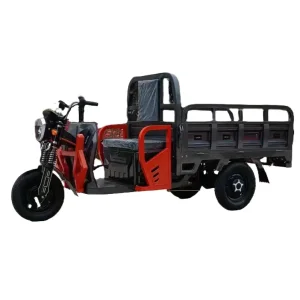

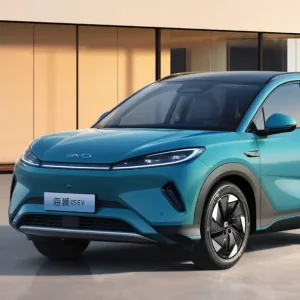
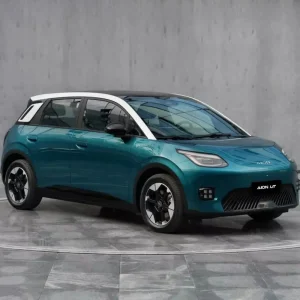


As a global supply chain solutions provider, Tianli International Trade Group operates at the convergence of advanced automotive logistics and low-altitude Unmanned Aerial Systems (UAS) engineering. Officially verified by the Ministry of Commerce of China, our footprint extends across automotive export services, new energy vehicles, electric micro-mobility, and target UAS countermeasures.
We solve critical procurement bottlenecks for international dealers and military-industrial buyers. By integrating high-volume automotive parallel exports with bespoke target drone design, we provide a unified procurement platform that drastically minimizes transactional waste while maximizing margin efficiency.

Documented manufacturing capacities, patents, and global reach that ensure contract performance and structural safety.
In modern low-altitude warfare and threat intelligence simulation, the term "cheap target UAV" does not imply substandard manufacturing. Rather, it represents a pivotal structural shift towards high-fidelity, expendable drone platforms engineered to replicate asymmetric threats at a fraction of standard defense budgets. Global military academies, radar validation ranges, and air defense units face a compounding challenge: the high cost of traditional target drones limits the frequency of live-fire exercises and radar calibration routines.
By leveraging commercial-off-the-shelf (COTS) electronic components, carbon-fiber reinforced plastics (CFRP), and modular autopilot software (such as ArduPilot/PX4 frameworks), contemporary Target UAV Factory Suppliers have disrupted the pricing structure. Modern target drones emulate diverse Radar Cross-Sections (RCS) and thermal signatures without requiring defense-budget-straining hardware investments. This allows operations to scale from single-drone target flights to multi-vector swarm emulations.
"The democratization of low-altitude threats demands that defense forces train against dense drone swarms. Achieving this requires target UAVs that are mass-producible, customizable, and financially expendable."
A sophisticated target UAV must act as a precise aerodynamic proxy. To achieve this cost-effectively, target drone factories integrate active Luneburg lenses, radar reflectors, and thermal flare pods into lightweight airframes. These cost-effective upgrades permit a drone with a physical footprint of 1.5 meters to appear on air-defense radar systems as a larger cruise missile or an attacking fighter aircraft, validating the operational readiness of surface-to-air missile systems and jammer arrays.
Sourcing from a Target UAV Factory requires navigating a complex nexus of manufacturing capacity, technology export compliance, and system integration capabilities. Global buyers, ranging from private security contractors to national defense ministries, require specific product parameters that match localized operations. Our research identifies three major procurement pillars driving the market today:
Legacy aerial targets require specialized recovery gear, pneumatic catapult launchers, and highly trained field technicians. Modern procurement officers prioritize modular designs that offer rapid assembly and flexible launching options, such as hand-launching, bungee catapults, or vertical takeoff and landing (VTOL) systems. Minimizing localized support gear lowers the overall cost-per-flight hour, facilitating more frequent training operations.
Buyers seek modular payload bays that accommodate various diagnostic payloads, including electro-optical/infrared (EO/IR) tracking pods, smoke generators, electronic countermeasure (ECM) simulators, and miss-distance indicators (MDI). A single, cost-effective target platform must be capable of quickly swapping these modules in the field without requiring factory-level recalibration.
With the proliferation of multi-sensor defense suites, target drones must simultaneously challenge visual, infrared, and radio-frequency sensors. Factories are responding by embedding low-cost heating elements in the engine exhaust zones to simulate thermal engines, and coating fuselage panels with radar-absorbing or radar-reflecting materials to match target parameters.
Beyond supplying the physical target drones, a comprehensive low-altitude security posture requires integrating detection and countermeasure systems. The defense landscape is no longer siloed; organizations must acquire target UAVs to test and calibrate their own defensive architectures. Tianli International Trade Group addresses this feedback loop by aligning our product lines across two vital sectors:
By simulating real-world threats with cost-effective target drones, safety officers and system engineers can establish accurate baselines for detection ranges, system latency, and jammer effectiveness. This approach prevents expensive procurement errors in national security and critical infrastructure projects.
Technical capabilities optimized for high-demand, harsh environments and complex mission profiles.
Optimized internal propulsion layouts paired with lightweight carbon composites deliver flight endurances exceeding 90 minutes on economic fuel or battery configurations.
FHSS (Frequency-Hopping Spread Spectrum) data links safeguard communication channels from premature jamming interference during calibration runs.
Integrated payload configurations support active Luneburg lenses and thermal exhaust augmenters, scaling target appearance dynamically across RF and IR channels.
The convergence of artificial intelligence, high-density energy storage, and additive manufacturing is reshaping the target drone landscape. To maintain leadership in target UAV engineering, our collaborative roadmap focuses on three critical technology fronts:
Future testing will require simulating coordinated swarm maneuvers rather than evaluating defenses against isolated threats. Our upcoming software upgrades utilize decentralized mesh networks, enabling multiple target drones to adjust their flight paths dynamically in response to detected countermeasure deployments. This capability tests C-UAS detection algorithms under high-density clutter conditions.
To extend target range and cruise velocities while maintaining low manufacturing costs, we are transitioning to hybrid fuel-electric powertrains and solid-state battery systems. These power configurations deliver the high-voltage discharge rates required for rapid climbing maneuvers and high-speed dash phases, simulating jet-powered drone threats without the cost of miniature turbine engines.
In alignment with global sustainability goals and environmental regulations on testing ranges, we are researching bio-resins and natural fiber composites. This work aims to develop target airframes that disintegrate rapidly after impact or water recovery, preventing long-term pollution in sensitive training environments.
Sourcing dual-use technologies and target UAV systems requires strict compliance with international trade laws, export licensing, and certification processes. As a verified exporter operating under China's Ministry of Commerce guidelines, Tianli International Trade Group ensures compliance across every transaction phase:
Our legal division manages all paperwork for export control approvals, ensuring that target drone systems, communication equipment, and related subsystems are cleared for delivery to target ports. We work closely with destination customs agents to prevent import delays.
Every target platform undergoes a rigorous testing program prior to crating, including static load tests, propulsion system burn-ins, and hardware-in-the-loop (HIL) simulation runs. This process reduces field setup issues and ensures out-of-the-box reliability.
We guide international buyers through the preparation of End-User Certificates, facilitating transparent communication with state regulators and ensuring compliance with international non-proliferation standards.
Answering critical technical and commercial questions for international procurement managers.
Cost-effective target UAVs achieve savings through structural optimization and commercial-off-the-shelf (COTS) avionics rather than compromising safety. Using modular wings, composite fiberglass/carbon airframes, and open-source industrial flight controllers cuts manufacturing costs by up to 60% compared to legacy military-only platforms, while ensuring flight safety and reliable payload carrying.
Yes. By mounting passive radar reflectors (such as corner reflectors) or active RF amplifiers (Luneburg lenses), the Radar Cross-Section (RCS) can be adjusted to mimic helicopters, fighter aircraft, or cruise missiles on tracking radars. This allows defense forces to test air-defense systems against multiple threat profiles using a single, cost-effective airframe.
Tianli operates under export certifications approved by the Ministry of Commerce of China. We handle export documentation, customs declarations, and compliance checks. We collaborate with international shipping lines specializing in lithium battery transport and heavy equipment to ensure safe delivery to your specified port of entry.
Yes, we provide OEM/ODM services. Our engineering team can modify structural payload bays, customize power distribution boards, and integrate proprietary software protocols to match your payload systems, such as RF jammers, camera arrays, or telemetry devices.
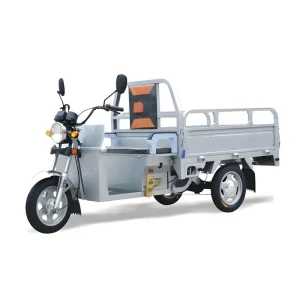
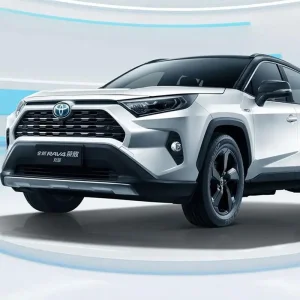
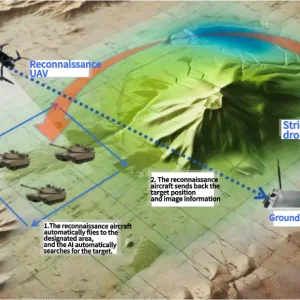
Discover more from our integrated industrial solutions, including hybrid passenger vehicles, heavy-duty cargo tricycles, and advanced defense systems.





Specify your target specifications, payload weights, required certifications, and port of delivery. Our engineers will reply within 24 hours.