Home >
UAV >
OEM AF series intelligent reconnaissance and strike integrated unmanned aerial vehicle system Pricelist, Service
1 / 1
OEM AF series intelligent reconnaissance and strike integrated unmanned aerial vehicle system Pricelist, Service
• No DJI required, no pilot needed, built-in reconnaissance and strike linkage. • Reconnaissance aircraft search for targets automatically. • The strike drone automatically and precisely tracks the strike target. • Swarm control of the strike machine, one remote control to drag ten. • Strong anti-interference ability.
No DJI required, no pilot needed, built-in reconnaissance and strike linkage.
Reconnaissance aircraft search for targets automatically.
The strike drone automatically and precisely tracks the strike target.
Swarm control of the strike machine, one remote control to drag ten.
Strong anti-interference ability.
I. Overview
The AF1 series has completely revolutionized the original collaborative mode of DJI reconnaissance combined with FPV pilot strikes. Through AI technology, one ground station and one operator (without the need for a pilot) can simultaneously control one reconnaissance unmanned aerial vehicle and 20 set up strike drones.
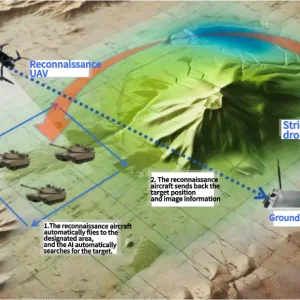
1. Quickly set up the automatic search area for the reconnaissance aircraft. The reconnaissance aircraft will automatically cruise with AI recognition and return the detected target.
2. With just one click, the reconnaissance drone can automatically allocate the set of targets it discovers to up to 20 strike drones.
3. The strike drone automatically searches and locks onto the target, and supports setting multiple aircraft to strike the same target in saturation.
4. The entire strike process does not require remote control by the pilot.
5. The control radius reaches 20 kilometers, and the maximum communication distance can be extended to 40 kilometers when optical fiber communication is applied. It has a wide range of kilometers and extremely strong anti-interference ability.
The AF1 series, with its fully automatic mission allocation and efficient long-range strike capabilities, helps customers navigate complex battlefield environments. The advantages of an efficient inspection and crackdown linkage system have been established within the territory.
II. System Introduction
Introduction to System Characteristics
1. Easy to operate
Operators can carry out various flight tasks without professional pilot training. With just one click to set the task objective, this type of unmanned aerial vehicle can automatically complete the flight that originally required professional unmanned aerial vehicles and complex operations that can only be handled by hand, including:
Navigation unmanned aerial vehicle flight
Search for path planning within the area
The attack mission will cruise automatically
Mobile target tracking
Attack route planning
Flight attitude control during the attack process, etc.
This system simplifies the target information transmission process between reconnaissance unmanned aerial vehicles and strike unmanned aerial vehicles, enhancing strike efficiency.
For the targets detected by the reconnaissance aircraft, the system can automatically calculate their GPS coordinates and mark them on the ground station map for analysis.
The target information returned to the ground station will be automatically shared with the attack drones connected to the ground station, achieving a seamless connection from the search module to the firepower module.
The ground station only needs to select the target list with one click, and the target will be automatically assigned to the strike drone and controlled simultaneously. The aircraft swarm takes off to launch an attack, significantly reducing the response time from target detection to the dispatch of strike drones.
2. Range, Endurance time, Load
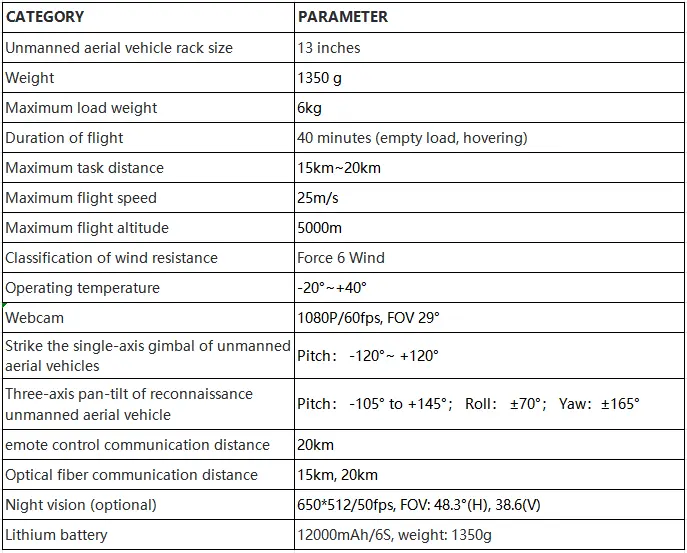
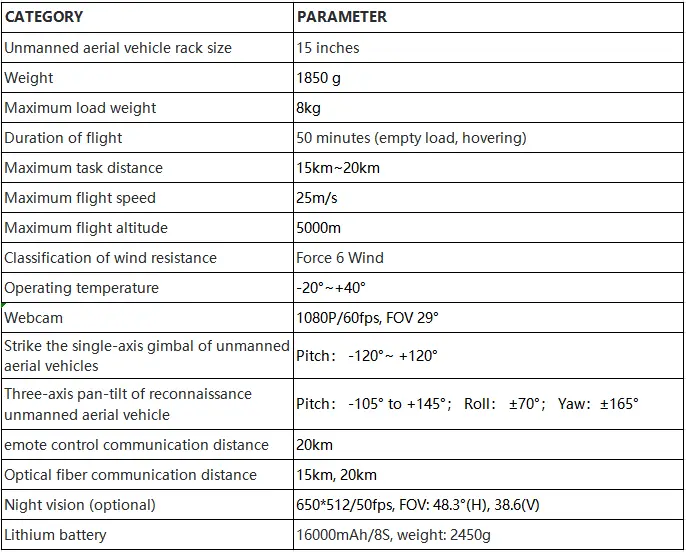
The AF1 unmanned aerial vehicle swarm system currently offers three flight platforms: 10 inches, 13 inches, and 15 inches. Depending on the battery solution adopted, the system can achieve a maximum battery life of 50 minutes and a maximum control radius of 20 to 25 kilometers, with a maximum effective load capacity of 8 kilograms (15 inches). For detailed specification parameters, please refer to Part III: System Specifications.
3. Introduction to Anti-interference Capability
A. The ground station and reconnaissance unmanned aerial vehicles support the use of optical fiber communication systems and can operate for a long time in a strong electromagnetic interference environment, maintaining stable video and remote control signal transmission.
B. Even when the communication and remote control channels of AI-powered drones are disrupted, they can still rely on AI to strike autonomously. The control system fully executes the entire mission chain combat process from flight, identification, tracking to strike.
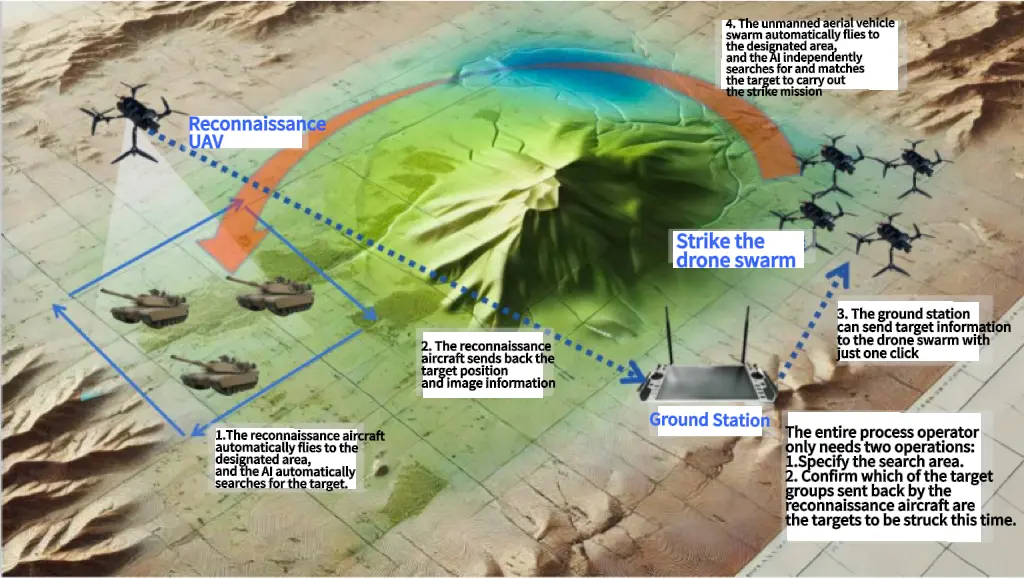
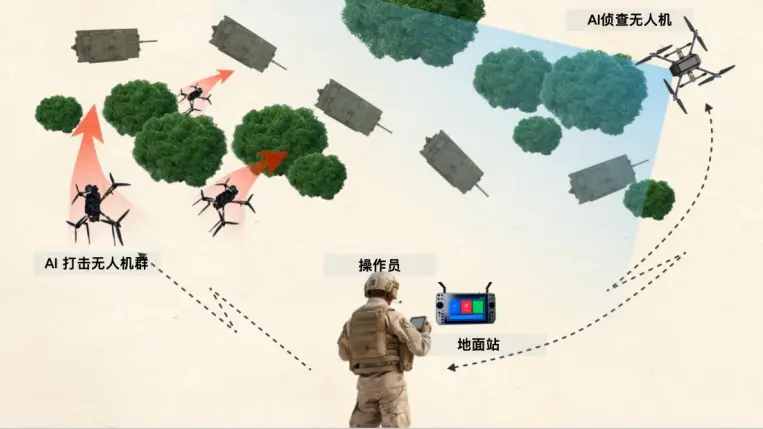
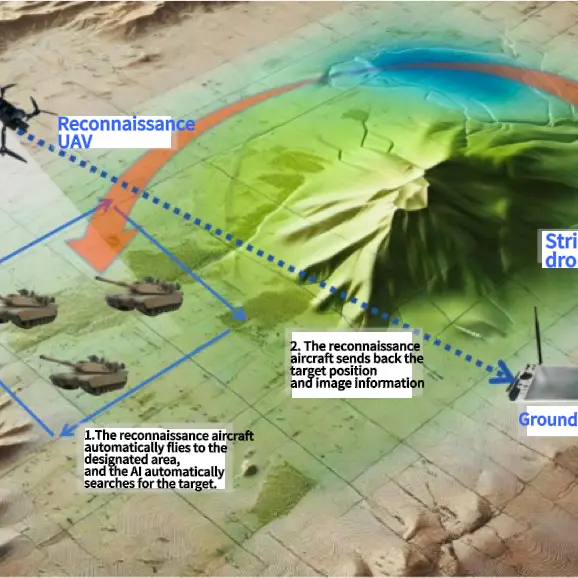
Figure. 1 The AF1 AI unmanned aerial vehicle system consists of three core modules: (1) Ground station (2) AI reconnaissance unmanned aircraft (3) AI strikes drones
A. Ground station: The ground station, as the communication and control center of the AF1 intelligent unmanned aerial vehicle swarm system, is an integrated system. It has become a collaborative combat platform for search, reconnaissance, and dispatch capabilities as well as firepower dispatch capabilities.
B. AI reconnaissance unmanned aerial Vehicle: AI reconnaissance drones can automatically fly to designated areas to conduct searches and automatically identify and avoid potential targets.
C. AI strikes drones: The AI strike drone receives the target coordinates and images sent back by the reconnaissance drone. After receiving information, it can automatically fly to the area where the target is located and carry out AI search and strike tasks.
Introduction to Drone Operation
The AF1 AI unmanned aerial vehicle system can achieve reconnaissance unmanned aerial vehicles to search for enemy assemblies with only one operator, enabling the dispatch of multiple strike drones to carry out cluster attacks in complex reconnaissance and strike mission scenarios. Its operation flow is as follows:
First Step
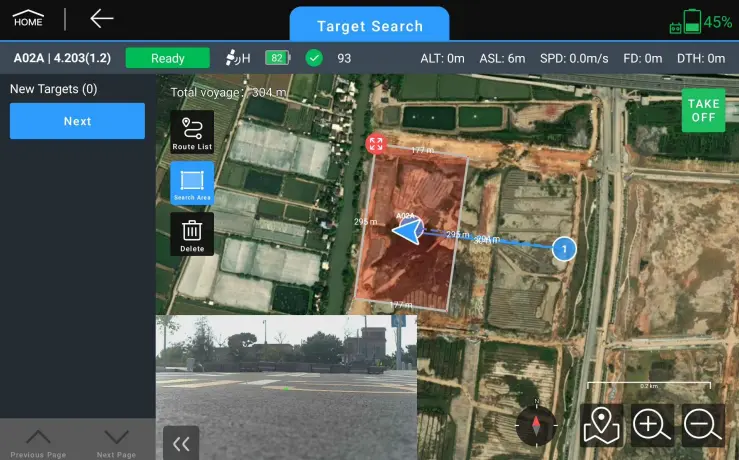
A drone swarm operator deployed behind the defense line uses wireless or optical fibers through ground stations to establish a communication connection. The reconnaissance unmanned aerial vehicle sets the search area. The reconnaissance unmanned aerial vehicle will automatically plan the search path within the area, independently completing the cruise flight and intelligent target recognition search tasks.
Figure. 2 Set tasks for reconnaissance unmanned aerial vehicles.
Second Step
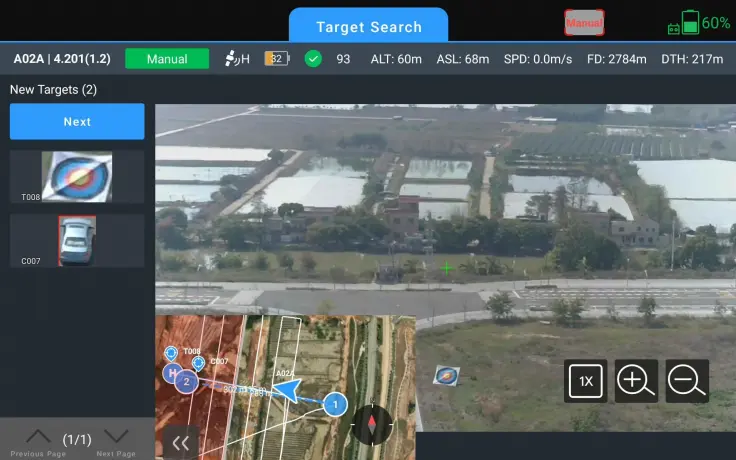
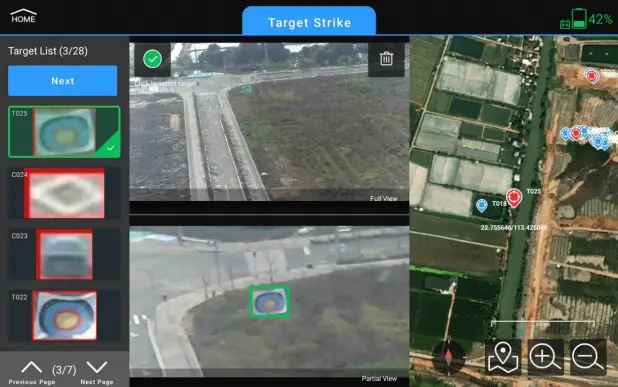
When the reconnaissance unmanned aerial vehicle detects the enemy troops that are assembling and preparing to attack, it will return a list of target information containing the target image and coordinate information to the ground station, maintaining a hovering monitoring state. The ground station automatically enters the target information discovered in this search into the list to be targeted, and marks it on the map for the operator to evaluate the priority of the strike.
Figure. 3 Target search Process
Third & Fourth Step
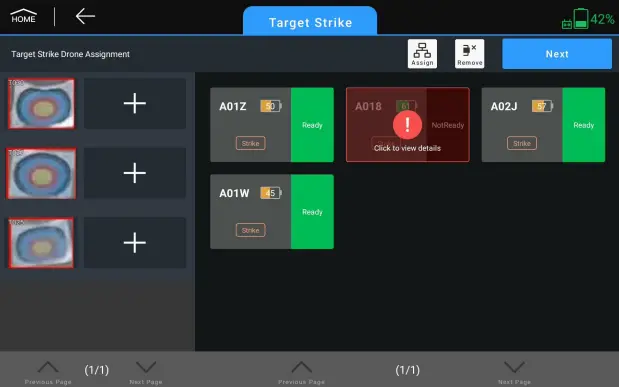
Third step: After the operator selects the target searched by the reconnaissance aircraft through the ground station, it can be automatically connected to the ground station. The standby strike unmanned aerial vehicle is assigned the strike mission corresponding to the target and initiates mission execution.
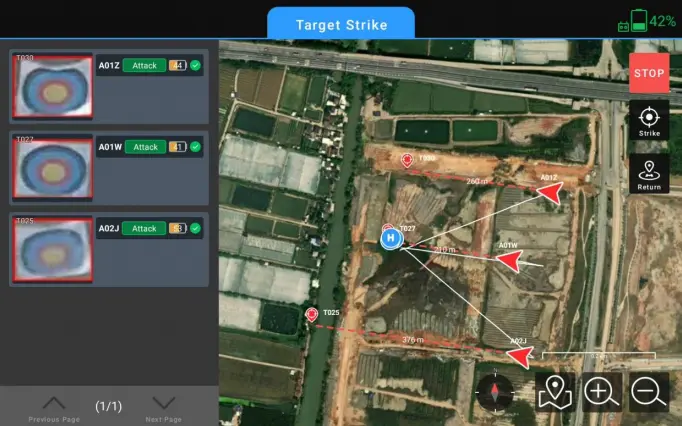
Fourth step: After receiving the attack mission and the coordinate information of the target image, the strike drone cluster will automatically complete the set group takeoff. Without the need for manual remote control intervention, the aircraft group can autonomously navigate and fly to the area where the enemy troops are located. Upon approaching the airspace, a target search flight is immediately launched, and the target is automatically identified and locked through the on-board AI camera system.
Figure 4 Select target list sent back by reconnaissance aircraft
Figure 5 Assign target list to the strike drone group
Fifth & Sixth Step
Fifth step: When the strike drone cluster is in place and detects the target, it will automatically enter the attack lock state, autonomously drawing attack routes and carrying out suicide attacks. During mission execution, the operator can use reconnaissance drones or monitor the strike effect in real time via the video footage sent back by the strike machine.
Sixth step: After a round of attacks, with just one click, a new batch of strike drones can be quickly assigned to the remaining targets, and the cluster carries out supplementary attacks.
Figure 6 Strike the unmanned aerial vehicle and set off to carry out the mission.
The entire combat process does not require multiple professional pilots; only one operator is needed to simultaneously control one reconnaissance unmanned aerial vehicle and over ten strike unmanned aerial vehicles to complete the entire tactical mission.
III. System Specification
Ground Station
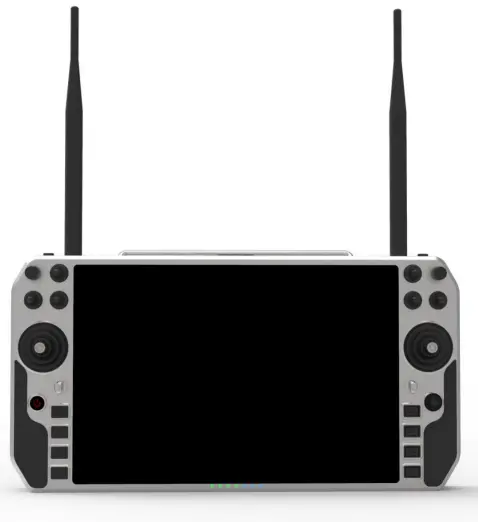
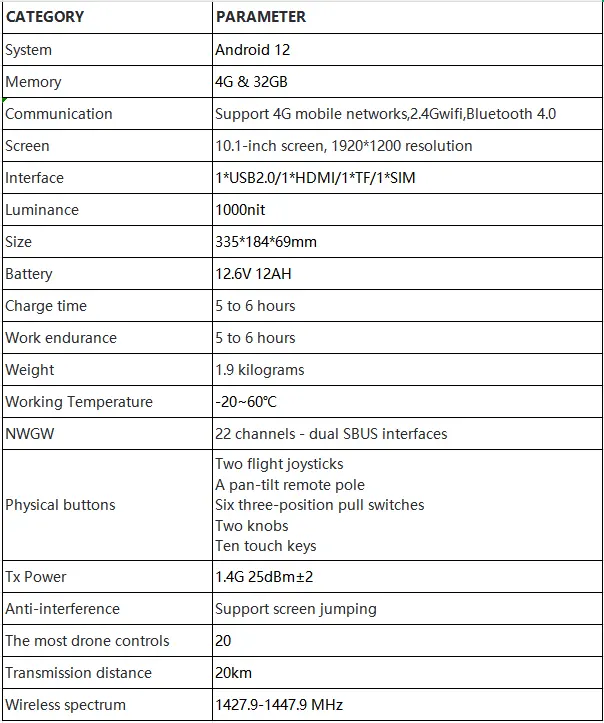
The ground station, as the communication and control center of the AF1 intelligent unmanned aerial vehicle swarm system, integrates search and reconnaissance capabilities into a collaborative operation platform for dispatching capabilities and firepower dispatching capabilities.
The operator of the unmanned aerial vehicle fleet can control the reconnaissance unmanned aerial vehicles to automatically carry out search tasks through the ground station. The received target information can be directly distributed to the strike drone group. With just one click, you can dispatch the strike machine cluster to perform the attack task. During this process, the operator can continuously monitor the task status through the ground station and real-time video.
Figure. 7 Ground Station
Figure. 7.1 Ground Station Interface
Unmanned Aerial Vehicle Platform
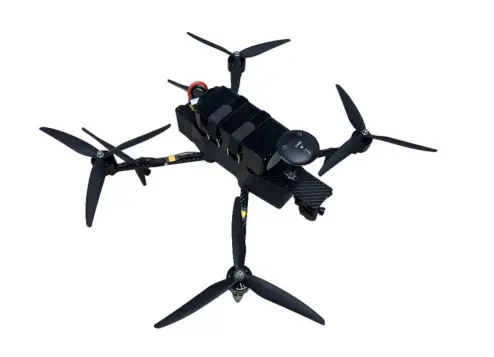
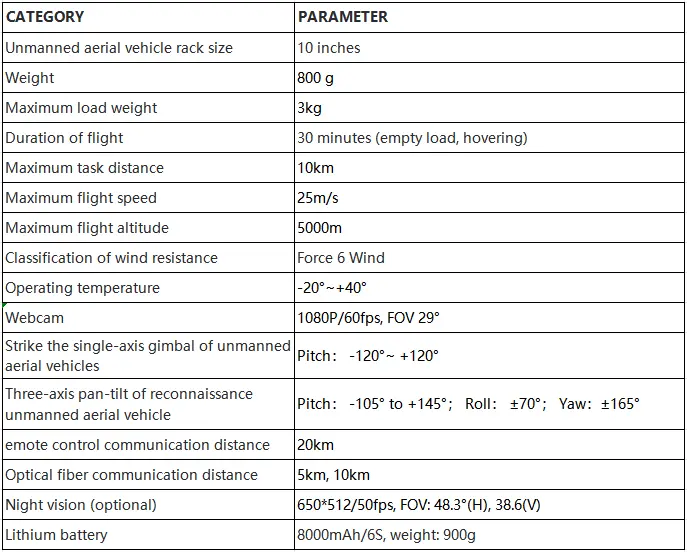
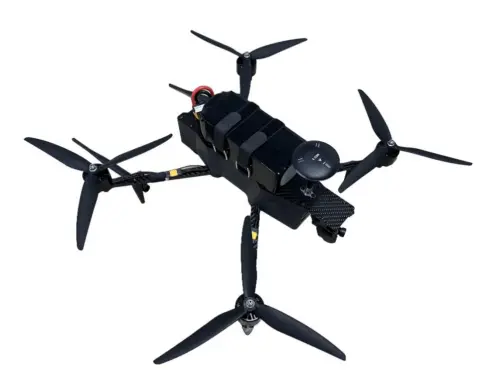
A. A1F10 flight platform
Figure. 8 F10 Unmanned Aerial Vehicle platform
F10 Flight Platform Parameters
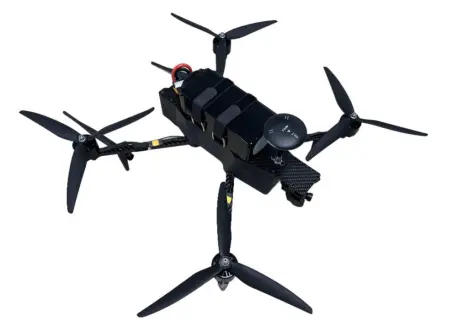
B. Model: F13 Flight Platform
Figure. 9 F13 Unmanned Aerial Vehicle platform
F13 Flight Platform Parameters
C. Model: F53 flight platform
Figure. 10 F15 Unmanned Aerial Vehicle platform
F15 Flight Platform Parameters
Frequently Asked Questions (FAQ)
Does the AF1 system require professional pilots to operate?
No. The AF1 system is designed to be highly user-friendly. Operators can perform complex flight operations, path planning, and target tracking without professional pilot training through one-click setup functions.
How many strike drones can be controlled by a single operator?
A single ground station operator can simultaneously control one reconnaissance unmanned aerial vehicle and manage a swarm of up to 20 strike drones, assigning targets automatically with a single click.
What are the operational range and communication capabilities?
The default control radius reaches 20 kilometers. When utilizing optical fiber communication, the maximum communication distance can be extended to 40 kilometers, offering a wide coverage area and strong anti-interference performance.
How does the system handle electromagnetic interference?
The ground station and reconnaissance drones support optical fiber communication systems to maintain stable transmission in heavy electromagnetic interference. If communication and remote control links are entirely cut off, the AI-powered strike drones can still execute the flight, identification, tracking, and strike processes autonomously.
What flight platforms are available in the AF1 series?
The system offers three flight platforms: F10 (10 inches), F13 (13 inches), and F15 (15 inches). Depending on the configuration, they can achieve a maximum battery life of up to 50 minutes and handle effective payloads of up to 8 kilograms (on the 15-inch model).
 Tianli