 Tianli
Tianli
Tianli
High-performance aerial platforms and command support vehicles optimized for North Africa's rugged operational environments.
The Democratic Republic of Algeria, representing the largest landmass in Africa, presents a unique geographical paradigm. With over 80% of its territory covered by the Sahara Desert, infrastructure security, border surveillance, and resource management present significant logistical challenges. In response, unmanned aerial systems (UAS) have transitioned from specialized tactical equipment to critical instruments of civilian, industrial, and security infrastructure.
This document analyzes the technical requirements, regulatory frameworks, supply chain dynamics, and strategic integration paradigms defining the Algerian UAV and counter-UAS market. As local industries modernize, the demand for high-endurance fixed-wing systems, tactical vertical take-off and landing (VTOL) platforms, and robust ground-to-air security installations is reaching unprecedented levels.
The adoption of UAV technology in Algeria spans multiple high-priority economic sectors, each demanding specialized payloads, airframe designs, and ruggedization metrics:
Sonatrach operates thousands of kilometers of pipelines carrying crude oil and natural gas across arid desert basins. Standard manual patrols are logistically difficult and dangerous. Long-endurance VTOL aircraft equipped with optical, thermal, and optical gas imaging (OGI) payloads allow operators to run automated leak detection pipelines, structural integrity checks, and unauthorized intrusion monitoring, feeding telemetry back to central monitoring sites.
Under the national agricultural expansion strategy, agricultural projects are moving south. Multispectral payload drones inspect crops, mapping moisture indexes and detecting early signs of soil degradation, enabling precise water distribution in arid areas.
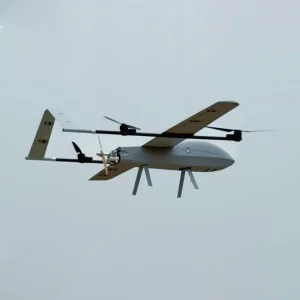
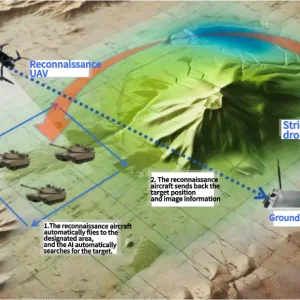
Algeria borders vast desert territories and long Mediterranean coastlines. High-endurance VTOL fixed-wing assets and intelligent tactical UAVs deliver persistence ISR (Intelligence, Surveillance, and Reconnaissance) capability, crucial for combating smuggling, monitoring marine traffic, and securing national boundaries.
UAV equipment operating within Algeria must endure extreme thermal conditions and atmospheric dust. Standard commercial off-the-shelf drones typically fail due to motors overheating and fine sand ingress. To operate effectively, industrial assets must conform to stringent technical baselines:
- Ingress Protection (IP54 / IP65): Flight controllers, electronics bays, and motors must have reliable sand and dust protection to prevent bearing degradation and flight failure.
- High Temperature Resilience: Structural materials must utilize composite carbon fiber with high heat distortion points to maintain integrity at ground temperatures exceeding 55°C.
- Propulsion System Heat Dissipation: ESCs (Electronic Speed Controllers) and motors require customized heat sinking, running dedicated airflow channels that protect internal circuits from incoming dust.
In the competitive UAV space, Shandong Tianli leverages the manufacturing capabilities of China’s Factory 4.0. This framework integrates advanced manufacturing execution systems, robotized component assembly, and streamlined parts procurement. This infrastructure enables high-precision customization, allowing airframes, control frequencies, and payloads to match the unique terrain and operational needs of Algerian partners.
By maintaining strategic partnerships with prominent new energy vehicle manufacturers, Tianli coordinates a unified industrial supply chain. This configuration guarantees consistent production times, robust quality assurance protocols, and reliable component replenishment. This approach mitigates the supply chain bottlenecks that often affect smaller providers.
Modern UAS operations require reliable mobile ground stations. Remote desert areas rely on support vehicles configured with satellite connectivity, solar charging arrays, and localized air conditioning. Tianli bridges this gap by offering a hybrid product portfolio: exporting dual-use ruggedized tactical vehicles (EVs and EREVs) alongside drone packages.
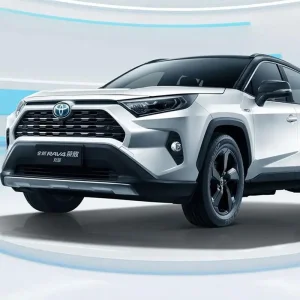
Extended-Range Electric Vehicles (EREVs) and durable SUVs serve as mobile command units. Equipped with integrated generator systems, these vehicles provide ongoing field charging, control link antennas, and operator shelter. This setup forms a complete, self-sustaining mobile surveillance platform suited to challenging remote missions.
Your Integrated Supply Chain Partner for Low-Altitude Security and Energy-Efficient Command Fleets.
Shandong Tianli International Trade Group operates as a comprehensive supply chain solutions provider. We specialize in end-to-end services for the automotive industry and lead in the research, development, and deployment of defense technologies for low-altitude unmanned aerial systems (UAS). Our operational model is built on two primary pillars:
We supply right-sized detection and neutralization systems, helping clients identify and implement defense strategies against unauthorized drone activity.
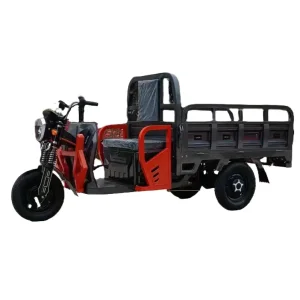
We source commercial, off-road, and hybrid vehicles from major Chinese manufacturers, serving as reliable support and command units for global teams.
We manage complex customs clearance, licensing, and container shipping to facilitate smooth handovers at major ports like Algiers and Oran.


Technical and regulatory clarifications regarding the deployment of UAV and support vehicle technologies in Algeria.
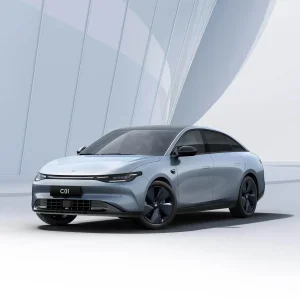
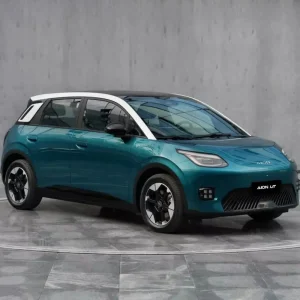
Robust Chinese EV & Hybrid platforms selected to support UAV ground command stations in diverse operating conditions.