 Tianli
Tianli
Tianli
Advanced drone solutions and tailored tactical logistics command vehicles specifically designed to meet ANAC requirements and operational challenges in South America.
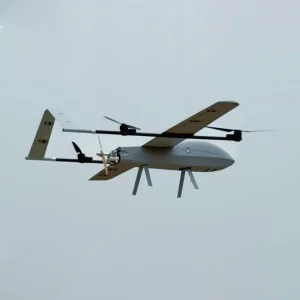
Long-endurance vertical take-off and landing platforms optimized for Amazon canopy surveying and expansive agricultural mapping.
View Specifications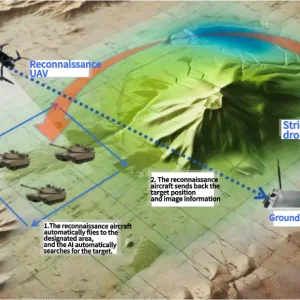
Integrated multi-payload defense and reconnaissance drone systems engineered for high-altitude border security and monitoring.
Request Quote
Robust field logistics drone featuring quick-deploy capability and weather-sealed frame for extreme humidity operations.
Check Availability
Deployable control terminals and communication relay suites for secure long-distance flight management and telemetry monitoring.
Technical InquiryAn in-depth whitepaper analysis of regulatory compliance, environmental hurdles, and trade patterns for UAVs entering South America's largest economic powerhouse.
The Brazilian market for unmanned aerial vehicles (UAVs) is experiencing exponential growth, driven by key industrial sectors including agribusiness, environmental monitoring, security, infrastructure maintenance, and mining. As the largest economy in South America, Brazil presents unique challenges and opportunities for global UAV manufacturers. With massive territorial expanses, such as the agricultural Cerrado region and the dense Amazon basin, the utilization of long-endurance vertical takeoff and landing (VTOL) craft has shifted from a novelty to an absolute commercial necessity.
However, exporting drones to Brazil requires a sophisticated understanding of localized compliance and regulatory hurdles. Any UAV operating commercially within Brazil must comply with the National Civil Aviation Agency (ANAC) rules under regulation RBAC-E nº 94. Additionally, the Department of Airspace Control (DECEA) regulates airspace access via the SARPAS platform, and the National Telecommunications Agency (ANATEL) mandates RF certifications for all onboard remote control, telemetry, and payload transmitters.

For enterprise buyers in São Paulo, Rio de Janeiro, and Curitiba, importing hardware without pre-certified radio frequency components is a major bottleneck. Our custom-engineered OEM solutions arrive with standard compliant frequencies compatible with ANATEL certification protocols. Working with a dedicated UAV exporter that integrates compliance documentation ensures that components pass Brazilian customs (Receita Federal) smoothly, preventing costly delays at ports of entry like Port of Santos or Guarulhos International Airport.
Deploying high-integrity aerial systems to solve critical infrastructural, agricultural, and security concerns across complex South American terrains.

Brazil is a global agricultural titan, particularly in soybean, sugarcane, and coffee cultivation. Modern agricultural conglomerates require Beyond Visual Line of Sight (BVLOS) fixed-wing drones capable of flying over thousands of hectares in a single deployment. By implementing multi-spectral sensors and RTK GPS guidance, our UAV configurations provide centimeters-level accuracy in plantation health analytics, yield estimations, and early crop disease detection.
In environmental monitoring, the Amazon rainforest presents a severe operational environment characterized by dense humidity, high heat, and minimal ground support infrastructure. Our VTOL systems utilize carbon-fiber airframes and marine-grade ingress protection (IP54 to IP66 ratings) to resist moisture penetration, allowing researchers and regulators to map canopy degradation, track illegal logging activities, and protect biodiversity hotspots safely.
Border security represents another vital domain. Brazil shares over 16,000 kilometers of land boundaries with ten different nations. Patrolling these terrains requires a combination of high-altitude fixed-wing UAVs, deployable tactical reconnaissance aircraft (such as the AF-series), and localized counter-UAS platforms to deny unauthorized airspace entry to hostile drones.
Tianli International Trade Group specializes in supplying both ends of this technological paradigm:
Bridging Chinese manufacturing speed and supply chain advantages with Brazilian field operations and regulatory frameworks.
As drone systems become more sophisticated, the distinction between simple remote-controlled hardware and enterprise UAS platforms has widened. Modern platforms rely on deep sensor fusion (IMU, LiDAR, optical, and thermal sensors), high-efficiency battery chemistry (LiPo/Solid-State), and robust communication protocols.
By consolidating advanced component manufacturing from global tech hubs and integrating them with localized assembly, training, and maintenance schemes, we offer cost-efficient, industrial-grade systems. This dual approach gives Brazilian operators the absolute cost and feature advantages of global imports, combined with the reliability of regional servicing.

Understanding that a drone is only as good as the team operating it, our Brazilian distribution channels provide end-to-end operational training:
Exploring the integration of AI-assisted piloting, alternative energy drone systems, and next-generation mobile command fleets.
As we look toward the end of the decade, the UAV sector in Brazil is poised to transition into fully autonomous, AI-driven operations. The implementation of 5G infrastructure along major agricultural corridors will enable real-time telemetry streaming and cloud-based AI analysis of multispectral imaging data. Rather than post-processing mapping data over several days, future systems will deliver automated infestation and yield alerts to farmers within minutes of takeoff.
Furthermore, propulsion technology is shifting. Hybrid propulsion systems combining high-energy-density gasoline generators with electric VTOL rotors allow for flights exceeding 6 hours. This enables regional corridor inspection for powerlines and trans-continental pipelines without requiring intermediate battery recharge stations.
At the core of this operational expansion is the integration of high-reliability new energy support vehicles. Field operators need mobile bases equipped to recharge high-capacity drone batteries, analyze large datasets, and house flight crews during multi-day mapping campaigns in remote regions like Mato Grosso or Pará.
Explore our range of new energy support vehicles, off-road command trucks, and hybrid field platforms designed to maintain uninterrupted UAV deployment in remote areas.

Eco-friendly electric command sedan equipped with auxiliary power outputs for recharging ground control equipment.
Get Pricing Info
Premium off-road platform with deep battery reserve capacity, designed for remote wilderness operation and monitoring teams.
Request Spec Sheet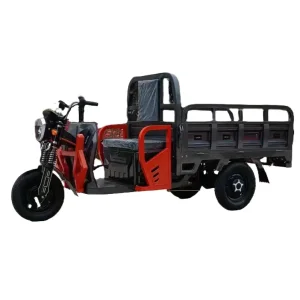
Ultra-maneuverable agricultural utility vehicle for moving battery racks, repair equipment, and smaller drones across crop rows.
Request Pricing
Extended Range Electric Vehicle providing immense operational radius for distant drone launch coordinates.
Configure Vehicle
Advanced hybrid drivetrain offering reliable field transport and off-grid generator functions for drone telemetry bases.
Request Quotation
Highly reliable and globally proven hybrid system for urban and rural UAV system transport.
Learn More
Spacious cabin layout ideal for mounting real-time flight telemetry screens and processing hardware.
Consult Sales
State-of-the-art luxury EREV command vehicle offering full mobile data synchronization and high-voltage power output.
Get Custom SpecEssential guidance on importing, licensing, and operating industrial-grade UAS and tactical vehicles within Brazil.
Connect with our aerospace export compliance engineers to discuss hardware specifications, customs strategies, and regional distribution networks.
Send Inquiry Now