 Tianli
Tianli
Tianli
Strategic insights into regulatory parameters, local commercial initiatives, and global logistics synergies.
The global Unmanned Aerial Vehicle (UAV) market has moved beyond experimental platforms, maturing into a critical component of national security, industrial efficiency, and mapping infrastructures. In India, the drone ecosystem is experiencing a major expansion, driven by policy shifts, technological localization, and structural demand. With the Indian government aiming to position the nation as a global drone hub by 2030, understanding the dynamics of localized UAV supplies, compliance channels, and cross-border industrial integrations is vital for commercial and defense enterprises.
This white paper analyzes the technical requirements, legal hurdles, and supply chain logistics required to source, build, and deploy unmanned aerial platforms in the Indian market. It bridges the gap between hardware supply constraints and field operations, highlighting how dual-use supply chains—ranging from command vehicles to advanced fixed-wing aircraft—can be configured to meet strict domestic frameworks while leveraging global manufacturing scales.
The industrial landscape in India is shaped by the Digital Sky platform and the Production Linked Incentive (PLI) scheme, designed to foster indigenous assembly and manufacturing. The ban on foreign-manufactured drone imports, instituted to support the "Make in India" initiative, has restructured sourcing models. Today, Indian importers and operators rely on sourcing components, raw materials (such as high-grade carbon fiber components and custom BLDC motors), and specialized system platforms that comply with local guidelines.
This localized regulatory system requires close cooperation with foreign suppliers who can deliver customized sub-assemblies, CKD (Completely Knocked Down) kits, and supporting land vehicles that align with Indian import criteria and DGCA (Directorate General of Civil Aviation) type-certification standards.
Highly customized platforms engineered for remote surveys, security operations, and mobile ground command.
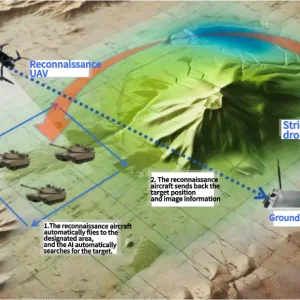


How UAV technologies and tactical vehicles are solving geographic and infrastructural challenges.
Agriculture remains a key driver of India's drone market. Initiatives like the Central Government’s 'Sub-Mission on Agricultural Mechanization' (SMAM) and the 'Namo Drone Didi' scheme have accelerated the deployment of large payload multirotors. These systems carry out targeted liquid fertilization, pesticide application, and multispectral crop diagnostics. Sourcing heavy-lift frame platforms that can withstand high temperatures and dusty environments is vital for local developers.
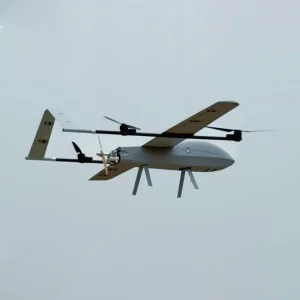
The SVAMITVA project is a government initiative targeting digital property mapping across hundreds of thousands of Indian villages. To meet these needs, operators utilize VTOL (Vertical Takeoff and Landing) fixed-wing platforms. These combine the spatial efficiency of a multirotor with the speed and range of a fixed-wing craft, mapping large territories in a single flight. Our export pathways for high-payload carbon fiber VTOL systems are customized to match these precise mapping standards.
India’s power transmission grids, railway corridors, and pipeline networks require regular structural integrity checks. Long-range inspection UAVs equipped with optical gas imaging (OGI) sensors, LiDAR payloads, and high-definition optical lenses identify thermal anomalies and structural wear, reducing dangerous manual climbs. These drone operations are supported by mobile ground stations integrated into off-road vehicles (like our specialized hybrid SUVs), enabling operators to track flights in real time across remote terrains.
Combining automotive logistics, material access, and rigorous testing protocols for Indian integrators.
The global UAV market is highly dependent on precision component supply chains. From high-energy-density LiPo batteries and carbon-fiber frames to advanced electronics (ESC and flight controllers), China's manufacturing clusters represent the benchmark for cost-to-performance efficiency. For Indian system integrators, establishing a resilient and compliant import pipeline is a major operational advantage.
Shandong Tianli International Trade Group leverages its dual role as a premier automotive exporter and a developer of low-altitude counter-UAS security technologies to bridge this gap. By utilizing integrated supply chain channels, we support the delivery of drone-adjacent vehicles, field operation units, and specialized structural UAV sub-components. This dual capability ensures that Indian enterprises receive complete logistical assets—such as ruggedized mobile command centers built on high-performance EV/EREV chassis—alongside critical hardware parts, streamlining the procurement process through a single partner.
Access high-end hardware, defense components, and support vehicles within a single, integrated supply chain framework.
All units undergo strict pre-shipment inspections, compliance checks, and secure packaging to prevent transit damage.
Our experienced customs and trade compliance teams navigate global regulations, facilitating clearances into Indian ports.
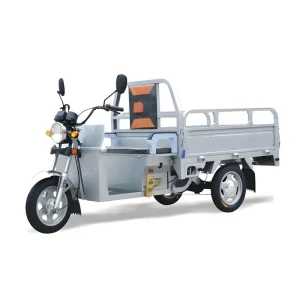
Optimized tactical support systems, commercial vehicles, and agricultural logistics assets designed for India's operating environments.











Ensuring full alignment with India's Directorate General of Civil Aviation (DGCA) and Digital Sky regulations.
Commercial deployment of UAV systems in India is subject to strict regulatory frameworks administered by the DGCA. Sourcing hardware, electronics, or supporting vehicle systems requires a clear understanding of these compliance metrics to ensure operational legality and prevent customs delays.
Although the import of complete CBU (Completely Built-Up) foreign drones is restricted to promote domestic manufacturing, India allows the import of components, parts, and sub-assemblies under strict import licensing guidelines. We work closely with Indian manufacturing and assembly partners, providing them with compliant, high-quality carbon fiber frames, landing gear systems, propulsion motors, and sensor payload integration kits. By exporting sub-components as CKD (Completely Knocked Down) packages, we help local builders meet the "Make in India" threshold while maintaining global build quality standards.
Drones operating in Indian airspace must be registered on the DGCA's Digital Sky portal, requiring a Unique Identification Number (UIN). For commercial classes, platforms require Type Certification. System integrators must ensure flight controllers are compatible with local NPNT (No Permission, No Takeoff) firmware modifications. Our engineering and integration partners work to align hardware parameters with these technical specifications, easing the certification path for Indian importers.
Advanced propulsion, autonomous AI navigation, and vehicle-to-everything (V2X) connectivity over the next decade.
As India integrates unmanned systems into its national infrastructure, the technical parameters of these systems are shifting toward longer ranges, higher autonomy, and cleaner power sources. Our R&D efforts are aligned with these global milestones, preparing our clients for next-generation deployments:
Expert insights on importing, local regulations, and hardware configurations for the Indian market.