 Tianli


Executive Whitepaper: Re-Engineering UAV & Counter-UAS Ecosystems for Iraq's Modernization
In an era defined by rapid technological acceleration and the expansion of the low-altitude economy, Iraq is undergoing a major paradigm shift. Historically centered on traditional security architectures, the country is actively positioning itself as an early adopter of civil-military integrated technologies, autonomous mapping, and low-altitude infrastructure protection. Secure infrastructure deployment, natural resource monitoring, and smart municipal borders require an integrated framework where Unmanned Aerial Systems (UAS) and Counter-UAS (C-UAS) technology work in tandem with high-performance ground logistics.
Tianli International Trade Group stands at the intersection of this industrial evolution. Capitalizing on a mature global supply chain, high-level automotive procurement channels, and dedicated aerospace research, we provide fully-developed low-altitude defense configurations and dual-use logistical support platforms tailored explicitly for the challenging environments of Iraq.
Iraq's Industrial & Commercial UAV Landscape: Opportunities & Realities
Deploying autonomous hardware within Iraq requires an understanding of both its macro-economic landscape and its extreme climate. The region's industrial centers, particularly the oilfields of Basra, the vast pipelines across Salah al-Din, and agricultural projects in the Tigris-Euphrates valleys, present distinct operational demands.
1. Energy Infrastructure and Pipeline Surveillance
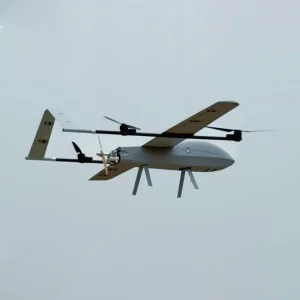
Iraq's economic spine is its petroleum infrastructure, featuring thousands of miles of high-value pipelines running through isolated terrains. Traditional manned patrol flights are expensive, logistically complex, and introduce safety risks. Integrating Vertical Take-Off and Landing (VTOL) UAV systems provides operators with continuous, real-time thermal scanning, leak detection, and perimeter monitoring. Our specialized airframes operate at range, delivering telemetry directly to regional operation centers.
2. Border Integrity and Anti-Infiltration Defense
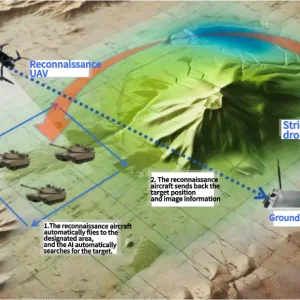
Securing remote border regions requires persistent aerial surveillance. Modern reconnaissance UAVs equipped with optical zoom and infrared capabilities act as force multipliers. However, as drone accessibility increases globally, the threat of unauthorized drone incursions rises. This has driven the demand for integrated UAV defense architectures featuring active detection radar, radio-frequency (RF) tracking, and directional jamming fields.
3. Environmental and Agronomic Mapping
As water management and environmental rehabilitation become critical regional priorities, modern sensor-equipped UAVs provide multi-spectral imaging to analyze crop health, trace soil erosion, and plan irrigation projects. These applications demand customizable payload arrays that can be easily configured by local field engineers.